Weatherproof. Heated. Hazard-Rated.
Instrument Enclosures for Every Transmitter, Analyzer and Field Panel
Heavy-duty instrument enclosures for refineries and chemical plants, power and water treatment facilities, pharmaceutical process lines, and test and measurement labs. Fiberglass, stainless, and heated housings hold the ingress, corrosion, and temperature protection the instrument actually needs — not a generic box.
Why enclosures matter
What an instrument enclosure protects against
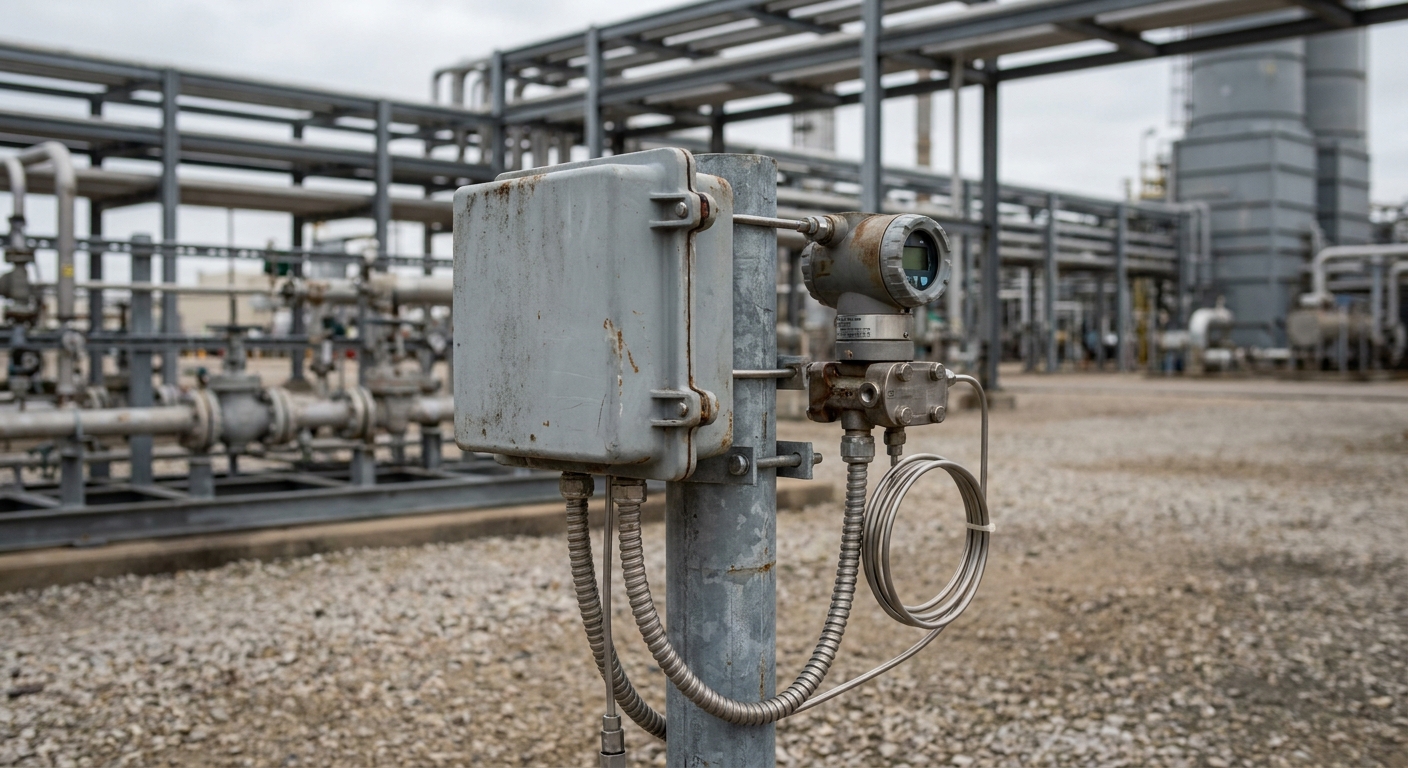
Field transmitters, analyzers, and gauges are precision electronics, rated for a specific temperature, humidity, and ingress window. Exposed to direct sun, rain, wash-down, dust, and winter cold, a device pushed outside that window doesn't just look weathered — it drifts out of calibration, corrodes at the terminals, or fails outright.
An instrument enclosure is deliberately built to keep the internal environment inside the instrument's rated window regardless of what is happening outside it: material and gasketing sealed to a NEMA or IP rating, insulation and heat where freezing is a risk, and, in a classified plant area, a housing rated for the hazard actually present. The result is protected precision electronics, not just a decorative box.
Enclosure body & material
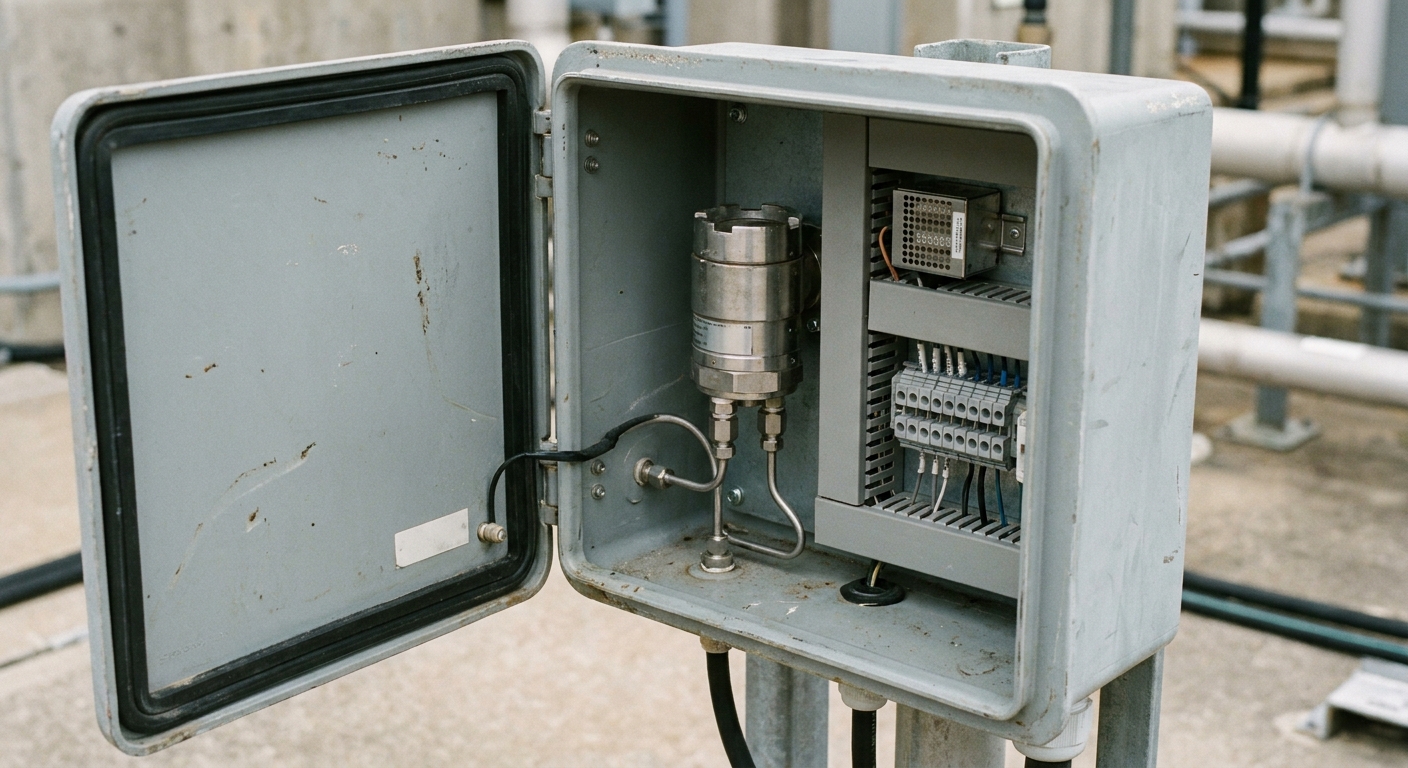
The housing itself: molded fiberglass-reinforced polyester (GRP), fabricated stainless steel, or aluminum/plastic for an electronic instrument case, chosen to hold the ingress rating and resist the corrosive exposure at the installation.
Door, window & latch
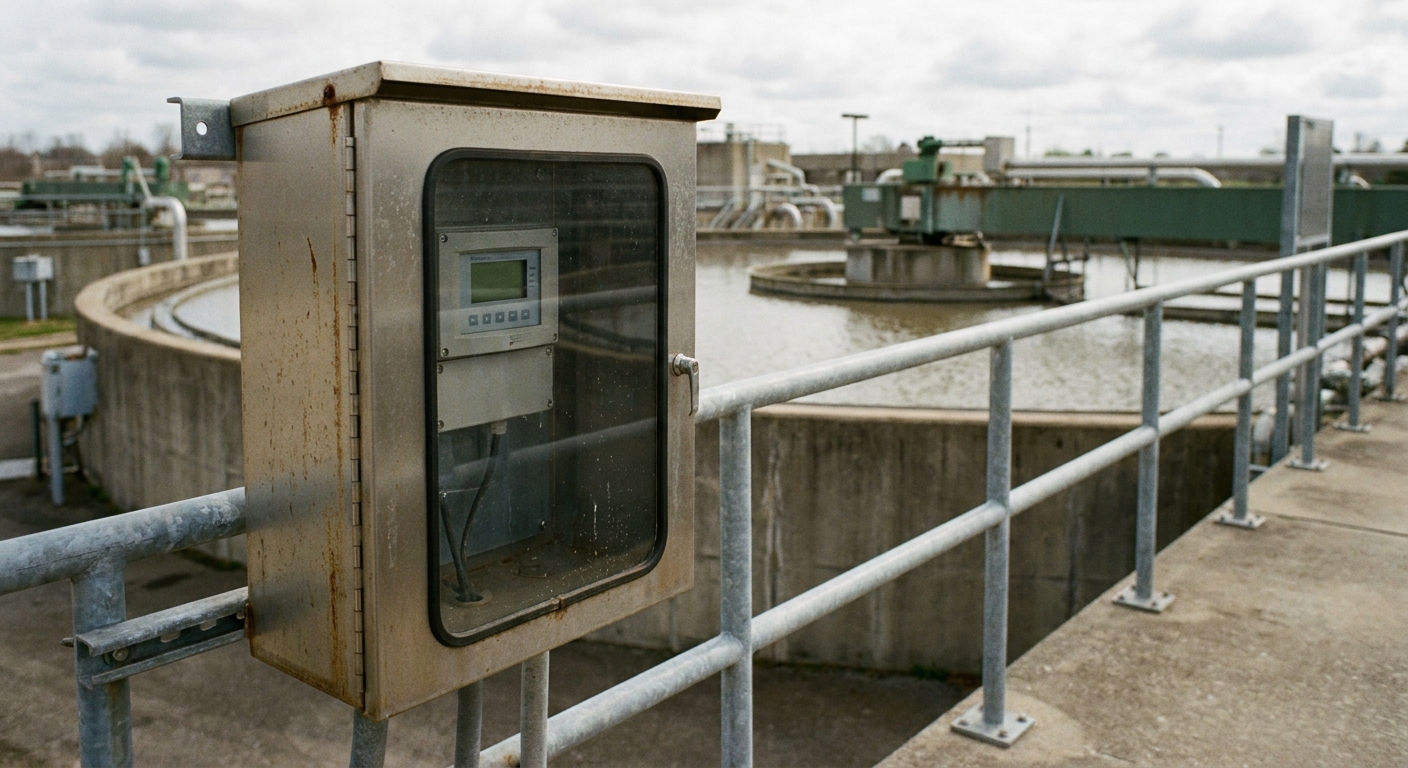
A gasketed, hinged access door with a quarter-turn or padlockable latch, often paired with a clear polycarbonate or tempered-glass window so a gauge or display can be read without opening the enclosure at all.
Mounting hardware
A bracket sized to clamp the enclosure to a 2-inch pipe stand or to a wall, positioned to leave clearance for the door to swing fully open during service.
Thermal management
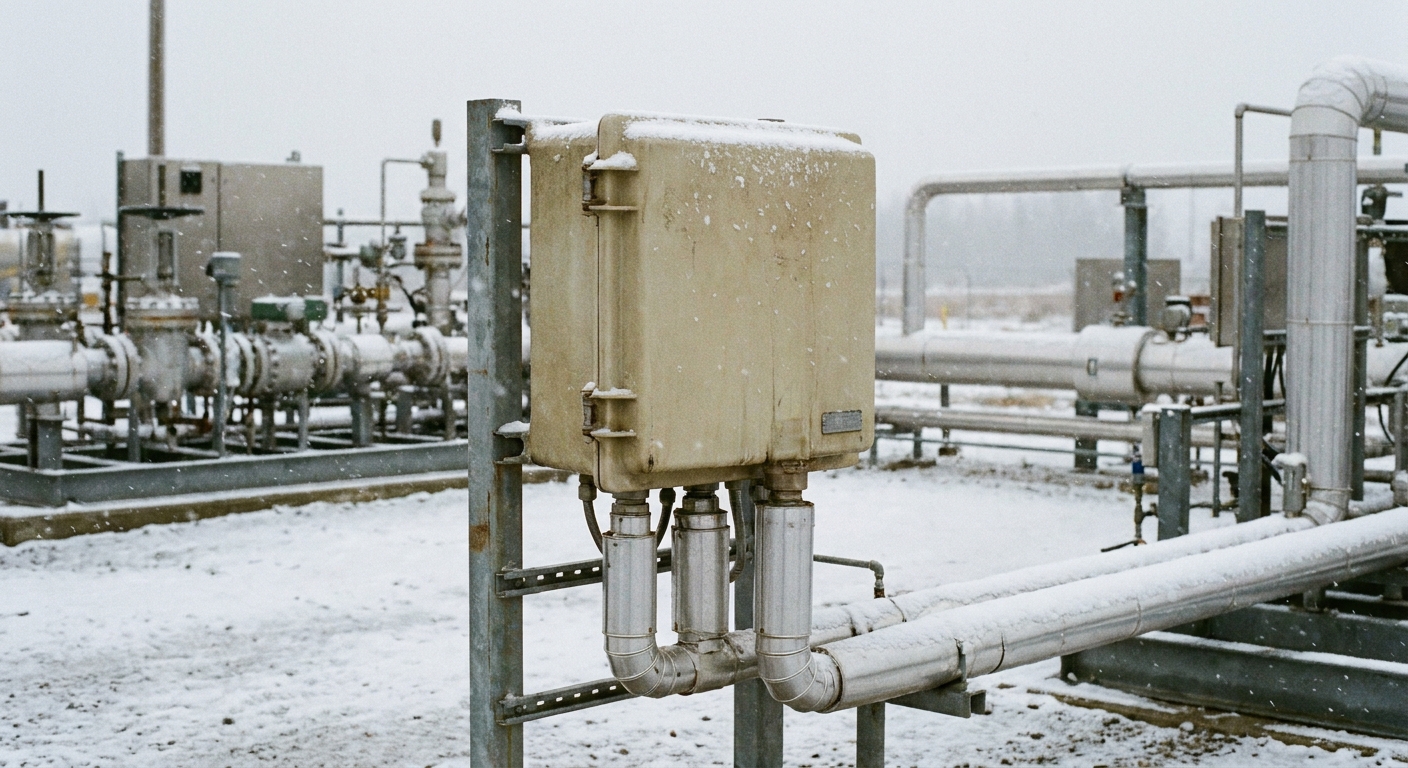
Insulation on its own, or insulation plus an electric heater and thermostat (or steam tracing where steam is already piped nearby), sized to keep the interior above freezing through the site's coldest stretch of winter.
Instrument enclosure types
Fiberglass, stainless, heated, and electronic cases
Field enclosures and electronic instrument cases both protect the instrument, but they differ in the material, the ingress rating, and whether the environment being guarded against is a refinery pipe rack or a workbench.
Fiberglass (GRP) instrument enclosures
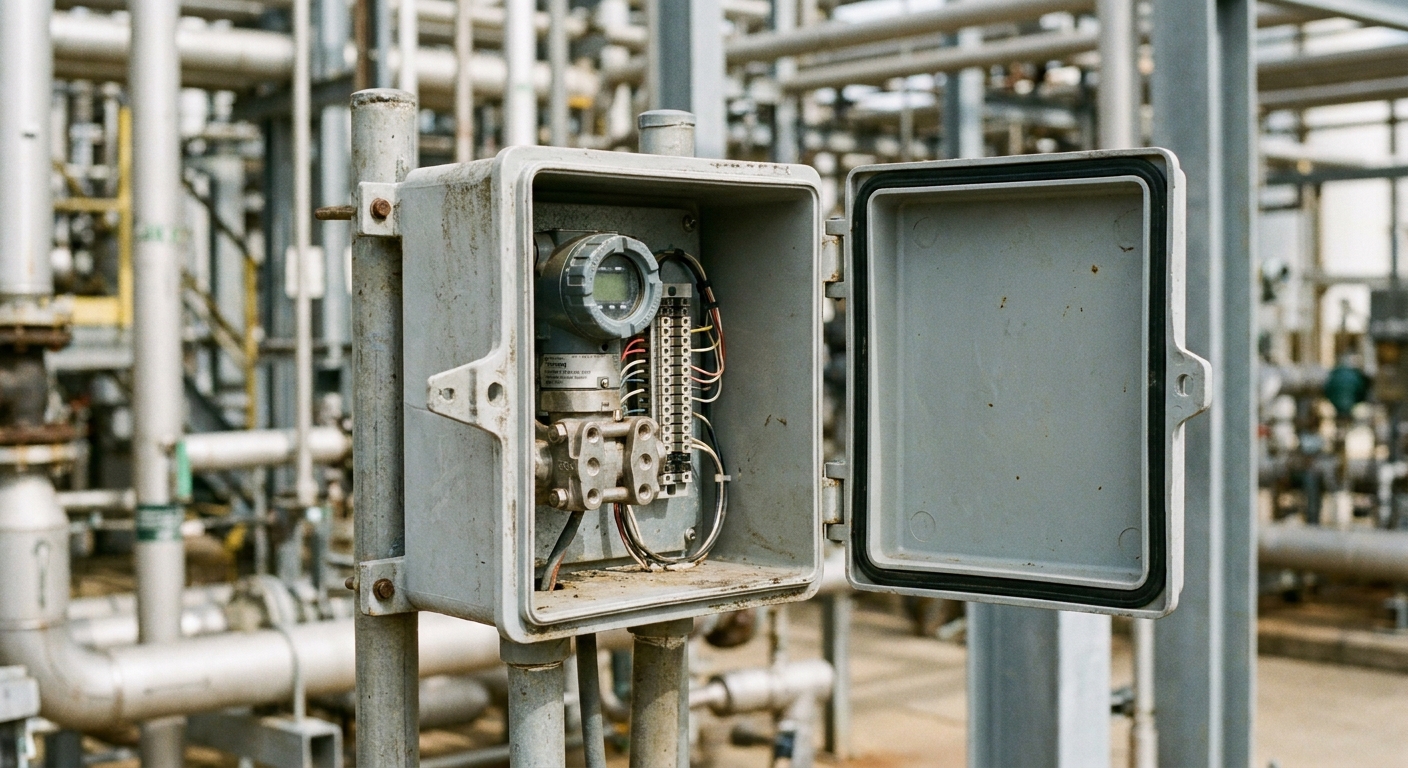
A fiberglass-reinforced polyester (GRP) enclosure is molded as a single non-conductive, corrosion-proof shell, then fitted with a gasketed access door and a pipe-stand or wall-mount bracket. Because the material itself does not rust or pit, GRP is the standard choice for chemical, coastal, and wastewater environments where a metal housing would need frequent recoating or replacement.
- Naturally corrosion-proof; no coating to maintain or touch up over the enclosure's service life.
- Lightweight enough for a single technician to mount on a 2-inch pipe stand without a lift.
- Non-conductive construction suits many hazardous-area and electrically sensitive installations.
Stainless steel instrument enclosures
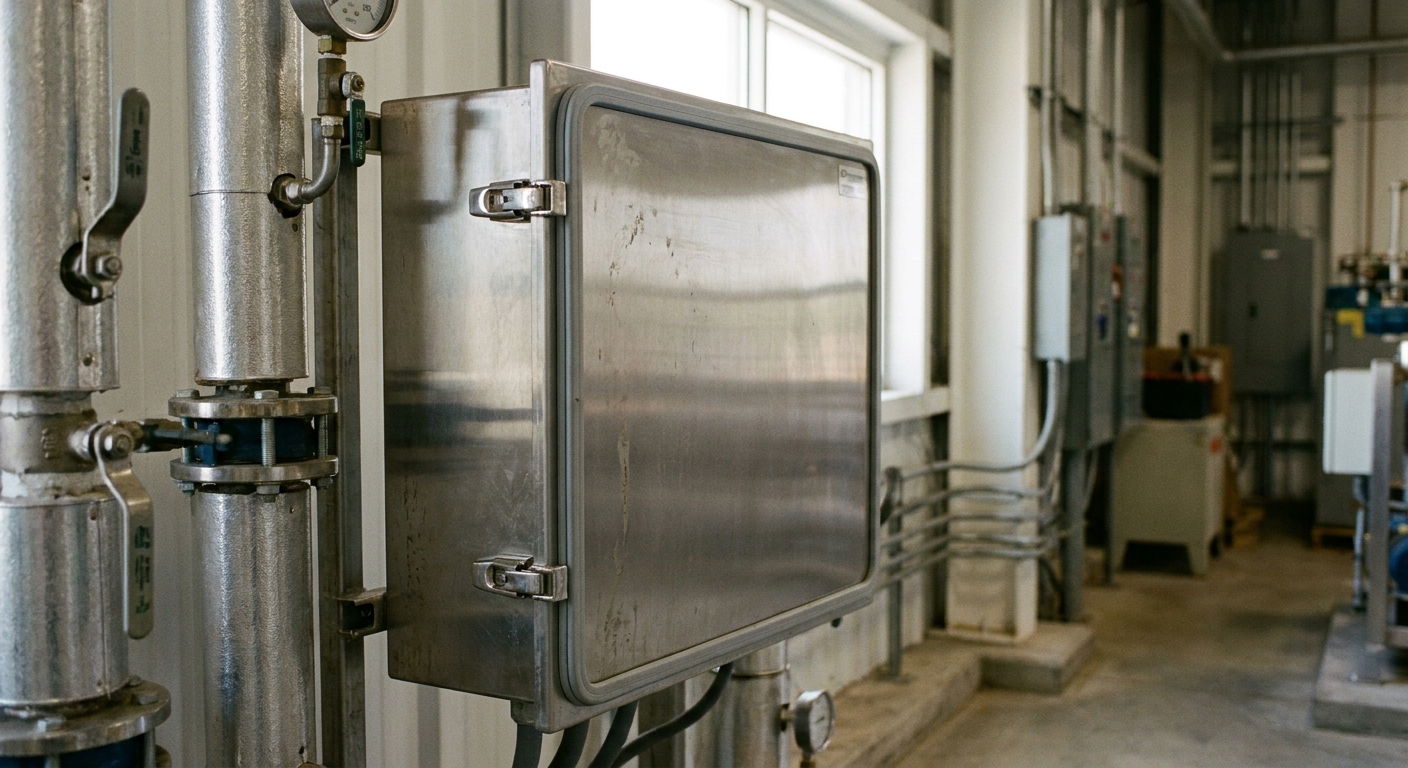
A stainless steel enclosure is fabricated from sheet stock, seamed and sealed at the corners, and fitted with a continuously gasketed, hinged door and a quarter-turn or padlockable latch. In the right alloy it resists corrosion as well as fiberglass while adding mechanical strength, UV stability, and a smooth, cleanable surface, which is why it is the default choice in hygienic, pharmaceutical, and high-impact-risk installations.
- Higher mechanical strength and impact resistance than fiberglass or plastic housings.
- Smooth, cleanable surface fits hygienic and pharmaceutical wash-down requirements.
- Holds its finish and dimensional stability under decades of UV and weather exposure.
Insulated & heated (winterized) enclosures
An insulated liner slows heat loss on its own; where hard freezes are routine, a thermostatically controlled electric heater, or steam tracing where steam is already piped nearby, holds the interior above freezing so instruments carrying liquid don't read false or freeze solid overnight.
Analyzer shelters & larger equipment housings
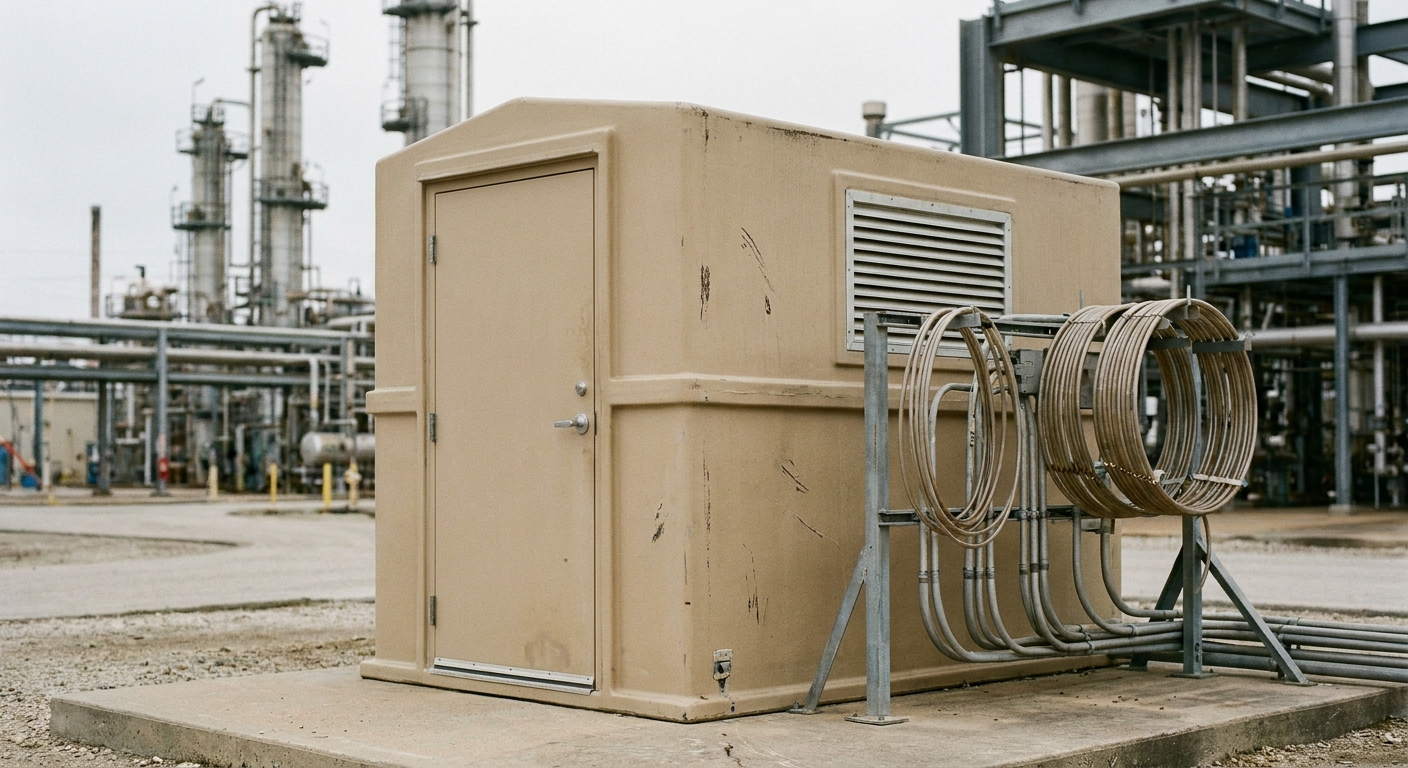
A larger, often walk-up, fiberglass or stainless housing built to enclose an analyzer, sample-conditioning system, or several instruments together rather than a single transmitter, frequently with its own ventilation, heat, and shelving for a complete local analyzer system.
Electronic & rack-mount instrument cases
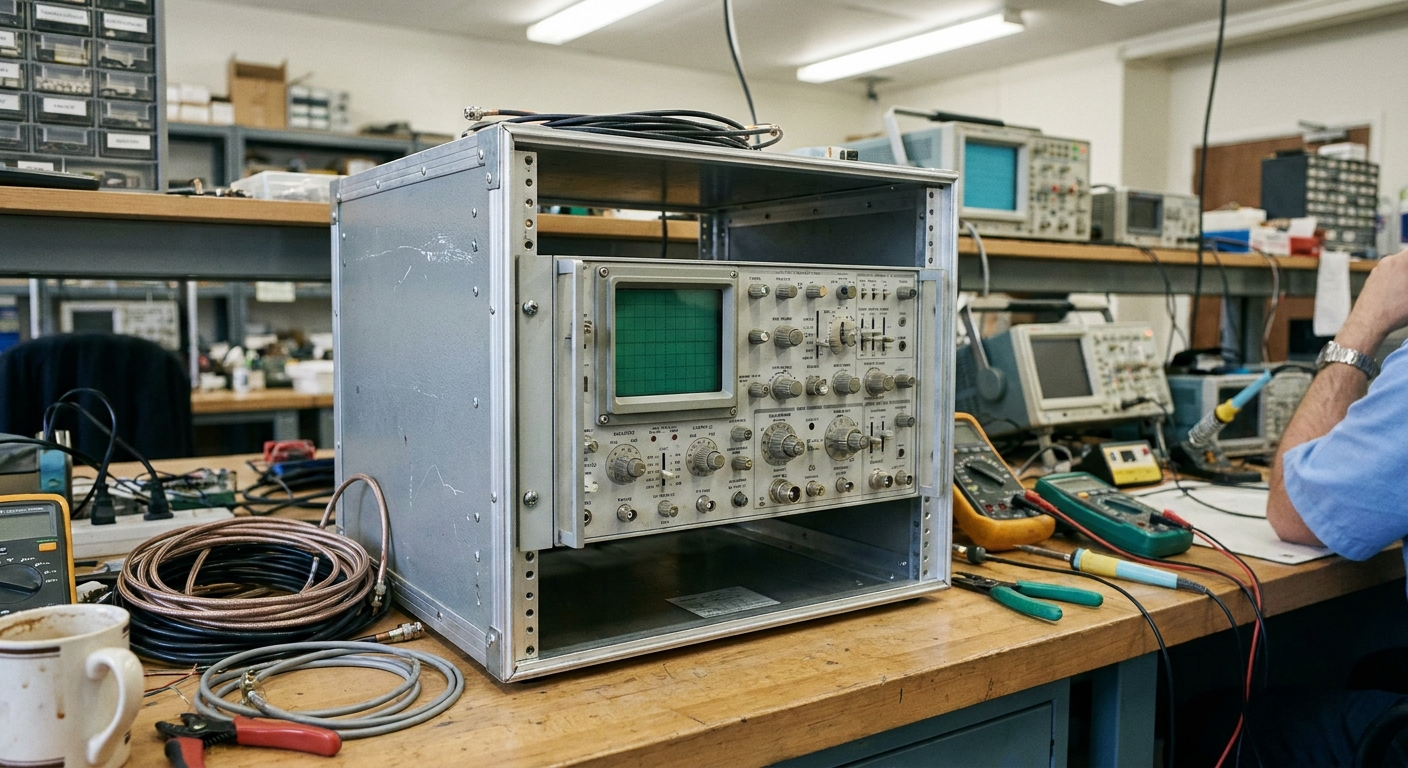
Aluminum or high-impact plastic cases for the test-and-measurement side: portable and handheld cases for field analyzers and meters, desktop cases for bench instruments, and 19-inch rack cases sized in rack units (U) for panel-mounted electronics in a control room or lab.
Applications
Where instrument enclosures work
Any field instrument exposed to weather, corrosion, or temperature extremes, and any portable electronics that need a rugged case to travel between sites, is a candidate for a purpose-built enclosure.
Oil & gas / refining
Transmitters, analyzers, and gauges mounted on pipe racks and unit piping see direct weather, vibration, and frequently a hazardous area classification, all at once. Fiberglass and stainless enclosures rated for the specific area classification are standard here.
Chemical processing
Corrosive vapors and wash-down are constant at a chemical plant, which is where fiberglass's inherent corrosion resistance earns its keep over an unprotected or poorly coated metal housing.
Power generation
Boiler, steam, and balance-of-plant instrumentation runs outdoors in every climate a plant sits in, and heated enclosures are routine wherever freeze protection matters through the winter.
Water & wastewater treatment
Analyzers and level and flow transmitters at treatment plants sit in a genuinely wet, often corrosive environment day in and day out, making a sealed, corrosion-resistant enclosure a baseline requirement rather than an upgrade.
Pharmaceutical & hygienic processing
Sanitary process areas call for a smooth, cleanable enclosure surface that tolerates repeated wash-down and sanitizing chemicals without harboring residue, which is where stainless construction is typically specified.
Test & measurement / field service
Portable analyzers, calibration references, and handheld meters travel between sites in aluminum or high-impact plastic cases built for drops and rough transport, not weatherproofing at a fixed outdoor location.
Selection criteria
How to choose an instrument enclosure
Get the ingress rating, material, and hazardous-area classification right and the enclosure does its job invisibly. Get any one of them wrong and the plant either sees premature instrument failure or an enclosure that cannot legally be installed where it is needed.
| Item | What to check |
|---|---|
| Environment & ingress rating | Match the enclosure's NEMA or IP rating to what it will actually see: wind-blown dust, splashing, wash-down, or submersion each call for a different minimum rating. Confirm the tested rating rather than assuming one based on the material alone. |
| Corrosion resistance / material | Weigh the specific corrosive exposure (chemical vapors, coastal salt air, wash-down chemicals) against fiberglass, stainless, or coated-metal options; the wrong material choice shows up as coating failure or pitting years into service, not on day one. |
| Temperature control | Confirm whether insulation alone is enough or an active heater is needed to hold the interior above freezing, and separately whether solar heat gain needs a sunshade or ventilation to keep the instrument within its rated operating range. |
| Hazardous area classification | Confirm the area classification (Class/Division or Zone, per the National Electrical Code, or the IECEx/ATEX system internationally) for the exact installation point before specifying; a general-purpose enclosure is not interchangeable with one rated for a classified location. |
| Size, access & maintenance | Size the interior for the instrument plus terminal and wiring space, and confirm the door swing and latch leave enough clearance to service the device without disturbing the process connection or nearby piping. |
| Mounting | Confirm whether a 2-inch pipe-stand bracket, a wall-mount bracket, or an existing structural member will carry the enclosure, and check that the mounting point and hardware are rated for the enclosure's loaded weight in the site's wind and vibration environment. |
A word on terminology
Field enclosures vs. electronic instrument cases
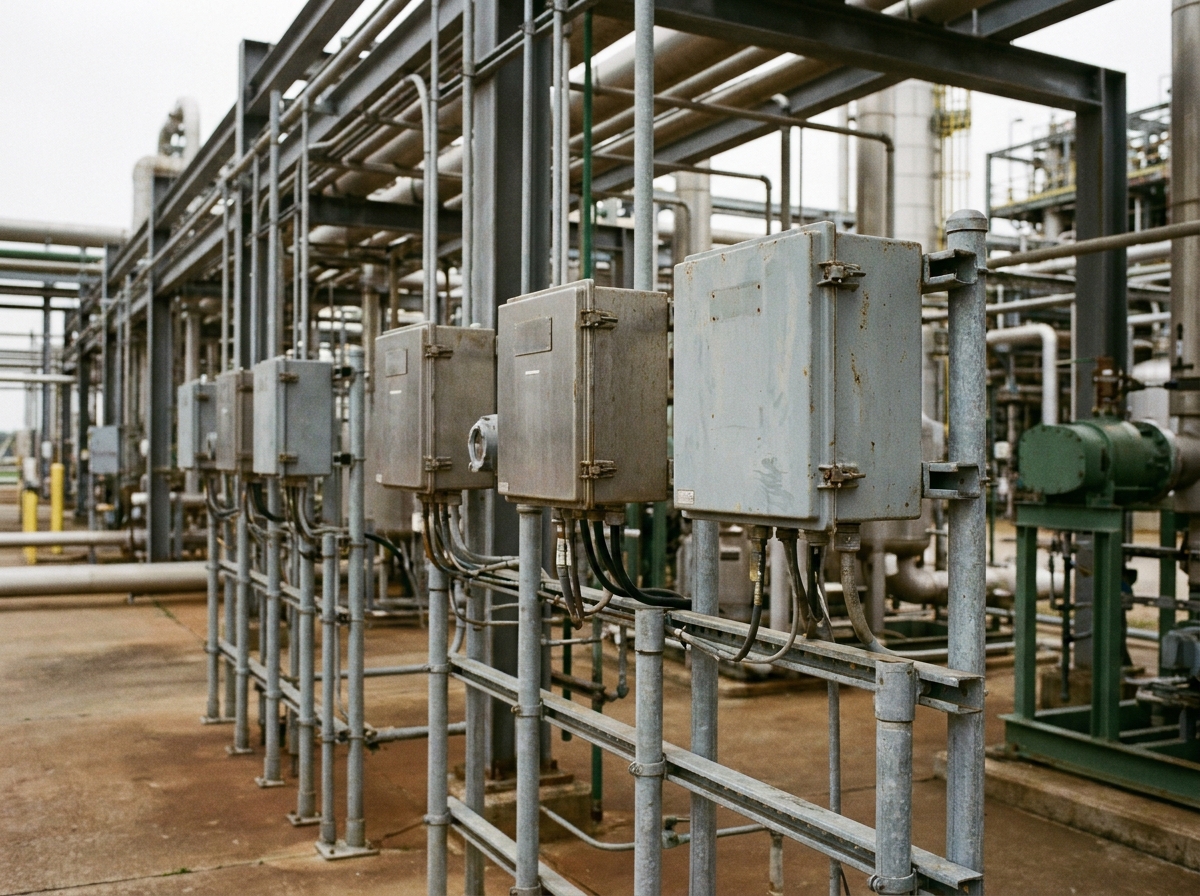
The field enclosure protects the installation. It is an empty housing bolted to a pipe stand or wall bracket next to a transmitter, analyzer, or gauge that is already wired into the plant, chosen for ingress rating, corrosion resistance, and, where required, a hazardous-area rating.
The electronic case ships with the instrument. A portable analyzer's aluminum case, a bench meter's desktop case, or a control-room electronics module's 19-inch rack case is selected for form factor, connector layout, and portability rather than outdoor ingress protection.
Many sites specify both. A portable analyzer arrives in its own rugged case for transport, then, if it is installed permanently in the field, goes inside a weatherproof field enclosure at the installation point.
Side by side
Comparing enclosure materials
| Fiberglass (GRP) | Stainless steel | Aluminum / plastic case | |
|---|---|---|---|
| Typical use | Field-mounted process instruments, outdoor | Field-mounted, high-impact or hygienic service | Portable, desktop, or rack-mounted electronics |
| Corrosion resistance | Excellent; inherent to the material | Excellent in the correct alloy | Limited; not intended for outdoor exposure |
| Relative weight | Lightweight | Heavier | Lightweight |
| Conductivity | Non-conductive | Conductive; grounding may be required | Conductive; grounding may be required |
| Typical ingress rating | NEMA 4X / IP66 common | NEMA 4X / IP66 common, higher impact rating | Rated for handling and transport, not weather |
| Hazardous-area suitability | Common; confirm the specific rating | Common; confirm the specific rating | Not typically installed in classified locations |
Hazardous area classification: where the rating matters most
A refinery unit, tank farm, or chemical process area where flammable gas or vapor may be present is where enclosure specification stops being a comfort question and becomes a safety and code requirement. North America's Class/Division and Class/Zone system, and the IECEx/ATEX system used internationally, both define categories for the hazard present and set specific construction requirements — explosion-proof, increased-safety, or intrinsically safe among them — for equipment installed there. Confirm the classification for the exact installation point with the site's electrical or process safety engineer before ordering; it is not something to infer from the general plant type.
Process
Keep enclosures performing for the life of the instrument
A correctly rated enclosure only keeps protecting the instrument if it is installed, sealed, and inspected correctly. Door gaskets, cable entries, and heater components are what typically fail first, not the housing material itself.
- Confirm the enclosure's ingress rating and hazardous-area rating (if applicable) against the actual installation location before it ships to site.
- Leave enough clearance around the mounted enclosure to fully open the access door and service the instrument without disturbing nearby piping.
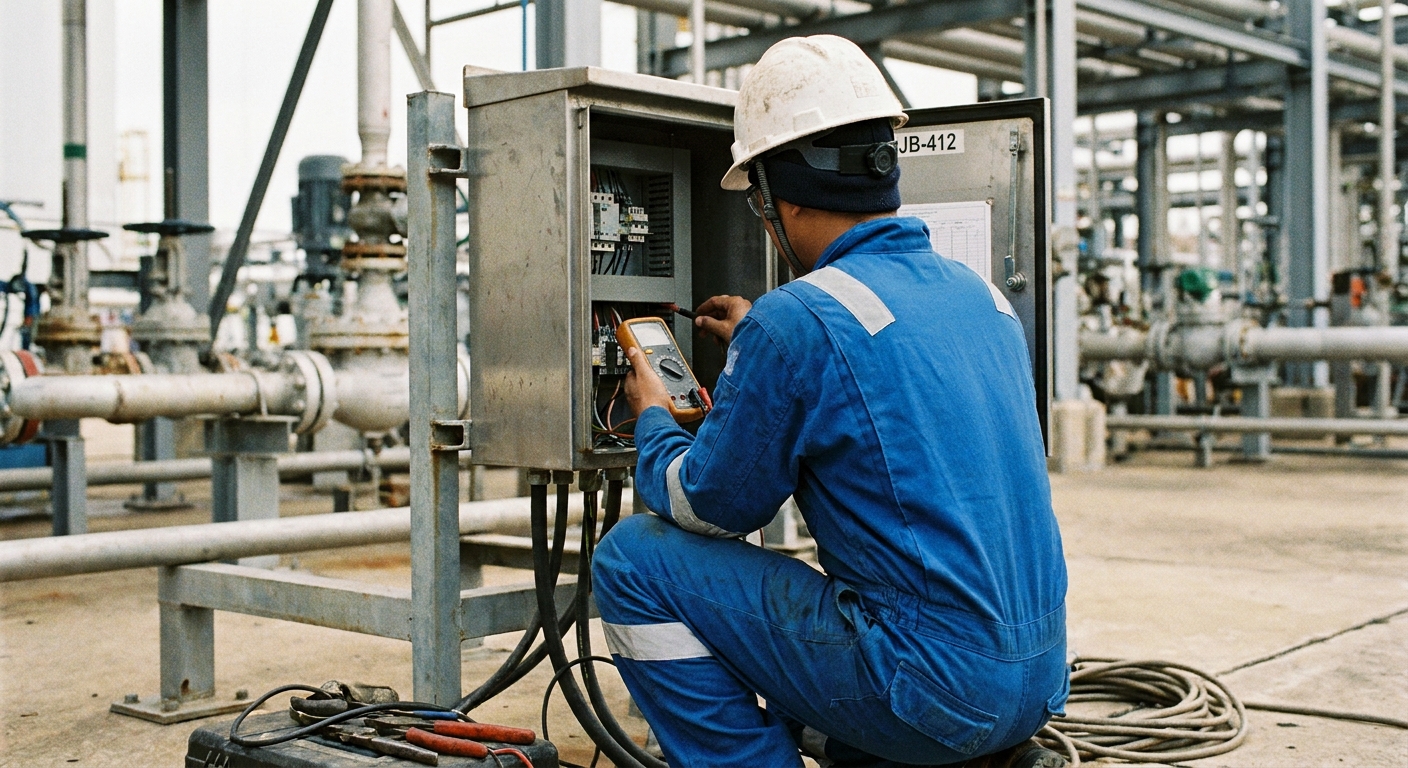
- Inspect door gaskets for compression set, cracking, or damage at every scheduled maintenance interval; a failed gasket is the most common cause of ingress failure.
- Confirm conduit fittings and cable glands are still fully sealed after any wiring work, not just after the original installation.
- Test heater and thermostat operation before the first hard freeze each year, not after an instrument has already frozen.
- On stainless enclosures in wash-down or hygienic service, confirm the cleaning chemical used is compatible with the alloy and any gasket material.
- Match sunshades and ventilation to instruments seeing high solar heat gain even where the enclosure is already otherwise correctly rated.
Ingress & rating reference
Ingress rating (NEMA/IP)
The tested rating for dust and water ingress under the applicable NEMA or IEC standard; confirm it against the actual site exposure, not a generic assumption.
Hazardous area rating
Where required, the specific Class/Division or Zone (or IECEx/ATEX) rating and protection method the enclosure and its components are certified for.
Thermal management
Insulation value, heater wattage, and thermostat setpoint sized to the site's minimum design temperature and the instrument's own rated operating range.
Mounting & access
The bracket type, load rating, and clearance needed for the door swing and instrument service access at the installed location.
Information only. The guidance on this page is general and educational. It is not engineering, electrical or safety advice and does not replace the manufacturer's instructions, applicable codes and standards, your site's hazardous-area classification, or a qualified professional. Verify all information before relying on it. Read the full disclaimer.
FAQ
Instrument enclosure questions
What is an instrument enclosure?
An instrument enclosure is a protective housing built around a field instrument, transmitter, analyzer, gauge, or piece of electronic test equipment to shield it from weather, dust, moisture, corrosive vapors, vibration, and temperature extremes. In a process plant it typically bolts to a 2-inch pipe stand or wall bracket next to the device it protects; on a bench or in a rack, it is the case the instrument itself lives inside.
Why do field instruments need an enclosure at all?
Transmitters, analyzers, and gauges are precision electronics, and most are only rated for a limited range of temperature, humidity, and ingress exposure on their own. Outdoors at a refinery, chemical plant, or water treatment site, direct sun, rain, wash-down water, dust, and winter cold can all push the device outside its rated operating window or accelerate corrosion of its housing and terminals. An enclosure keeps the instrument inside the environment it was actually designed for.
What is the difference between a NEMA rating and an IP rating?
Both describe how well an enclosure keeps out solids and liquids, but they come from different standards bodies and are tested differently. NEMA (National Electrical Manufacturers Association) ratings are common in North America and combine ingress protection with other factors like corrosion resistance and icing; IP (Ingress Protection) ratings, from the IEC, describe only solids and liquids using a two-digit code. NEMA 4X and IP66 are frequently referenced together because their practical protection against dust and powerful water jets is similar, but the two systems are not a strict one-to-one conversion, so always check the actual test rating for the enclosure you are specifying.
What does NEMA 4X or IP66 actually protect against?
NEMA 4X and IP66 enclosures are built to resist wind-blown dust, rain, splashing, and hose-directed water without letting moisture reach the interior, and NEMA 4X specifically adds corrosion resistance to that standard. That combination is why these two ratings show up so often on outdoor process instrument enclosures: the instrument sees wash-down, rain, and humidity, and the housing has to shrug all of it off without rusting through over years of service.
What is the difference between a fiberglass (GRP) and a stainless steel instrument enclosure?
Fiberglass-reinforced polyester (GRP) enclosures are naturally corrosion-proof, non-conductive, lightweight, and generally the lower-cost option for chemical, coastal, and wastewater environments where metal would corrode. Stainless steel enclosures cost more but offer higher mechanical strength, better resistance to physical impact and UV degradation over decades, cleanable smooth surfaces for hygienic or pharmaceutical service, and, in the right alloy, comparable corrosion resistance to fiberglass. The choice usually comes down to the specific corrosive exposure, mechanical risk, budget, and whether the site standardizes on one material.
When is a heated or insulated enclosure needed?
Any site with hard freezes needs to consider winterization for instruments carrying liquid, since a frozen impulse line or process connection can give a false reading or damage the transmitter. Insulated enclosures slow heat loss on their own; heated enclosures add a heat source, most commonly electric heat trace or a small thermostatically controlled heater, and sometimes steam tracing where steam is already available on site, to hold the enclosure interior above freezing through the coldest stretch of winter.
What is a hazardous (classified) area rating, and does every enclosure need one?
A hazardous area classification describes a location where flammable gases, vapors, or combustible dust may be present, and North America (Class/Division or Class/Zone, per the National Electrical Code) and the international IECEx/ATEX system both define the categories and set requirements for equipment installed there. Not every instrument enclosure needs a hazardous-area rating; it depends entirely on where the instrument is installed. A transmitter mounted in a general-purpose outdoor area does not need it, while the identical transmitter mounted next to a process line in a refinery unit almost always does. Always confirm the area classification for the actual installation location before specifying the enclosure.
What is a sunshade, and is it a substitute for an enclosure?
A sunshade is an open-backed cover, usually fiberglass or stainless, mounted over an instrument to block direct solar radiation and reduce the internal temperature swing the instrument sees. It is not a substitute for a sealed enclosure: a sunshade does not add ingress protection or corrosion resistance, it only manages solar heating. Sunshades are frequently used together with an enclosure, or on instruments that are already otherwise weatherproof but still see excessive solar heat gain in direct sun.
How do instrument enclosures typically mount in the field?
The most common field mounting is a bracket that clamps the enclosure to a 2-inch (schedule 40) pipe stand set in concrete or fixed to structural steel, which keeps the instrument at a consistent, accessible height near the process connection it serves. Wall-mount brackets are also common where a suitable pipe stand is not practical. Whichever method is used, mounting should leave enough clearance around the enclosure to fully open its access door and reach the terminals or calibration adjustment without disturbing the process piping.
What should I look for in the access door or window?
A door needs a gasket and latch design rated to the same ingress protection level as the rest of the enclosure body, since the door is where most seal failures happen over time. A clear polycarbonate or tempered-glass viewing window lets a technician read a gauge or display without opening the enclosure at all, which matters in a hazardous area where opening a live enclosure may require a hot-work permit or de-energizing the circuit first. Confirm the window material is rated for the site's UV exposure and chemical environment.
What is the difference between a field instrument enclosure and an electronic instrument case?
A field instrument enclosure is an empty housing installed around a process instrument that is already mounted in the plant, chosen mainly for weatherproofing, corrosion resistance, and hazardous-area rating. An electronic instrument case is the enclosure the instrument itself ships in, whether a portable aluminum case for a handheld analyzer, a desktop case for a bench meter, or a 19-inch rack case for data acquisition or control electronics, and is selected more for form factor, EMI shielding, connector layout, and portability than for outdoor ingress protection.
What is a 19-inch rack case used for?
A 19-inch rack case follows a standard width so it slides into a standard equipment rack alongside other instrumentation, controllers, or data acquisition chassis. Rack cases are sized in rack units (U) of vertical height and are common for panel-mounted analyzers, signal conditioners, and monitoring electronics in a control room, lab, or instrumentation cabinet rather than out in the weather.
How often should an instrument enclosure be inspected, and what should I check?
There is no single interval that fits every site; it should follow the plant's own preventive maintenance schedule and the manufacturer's recommendation for the enclosure and any heater installed in it. A typical inspection checks the door gasket for compression set or damage, confirms the latch still draws the door fully closed, looks for corrosion or coating damage on the housing (especially at mounting points and cable entries), verifies conduit fittings and cable glands are still sealed, and, on a heated enclosure, confirms the heater and thermostat are functioning before winter.
What is the most common mistake when specifying an instrument enclosure?
Specifying the ingress rating and material without confirming the hazardous area classification of the actual installation location. An enclosure that is correctly rated NEMA 4X or IP66 for weather can still be entirely unsuitable, or unsafe, in a classified area that requires an explosion-proof or increased-safety rated housing. Always confirm the area classification for the specific installation point, not just the general plant type, before finalizing the enclosure spec.
Request a quote
Get an instrument enclosure quote
One enclosure or a full plant order, fiberglass or stainless, heated or unheated. Tell us the instrument, the environment, and any hazardous-area requirement, and get a quote back.
- Fiberglass, stainless steel, insulated, and heated field enclosures
- Electronic, desktop, and 19-inch rack instrument cases
- Oil & gas, chemical, power, water/wastewater, pharma, and lab sizing